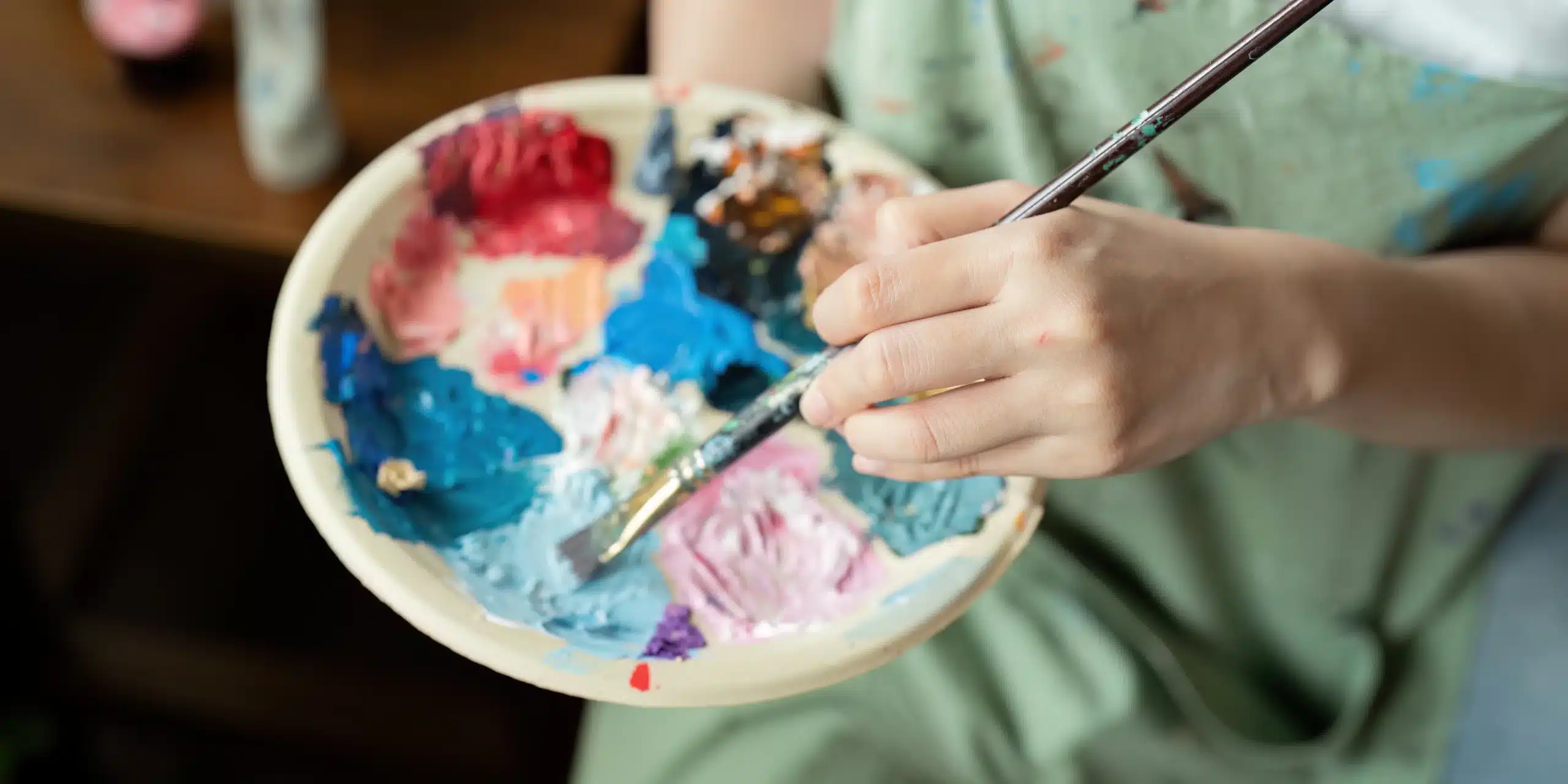
Healing Through Art
Do you find that you naturally gravitate toward imagery and or story to process your emotions or to understand your life more completely?
Have you wondered what it would be like to have the help of a professional art therapist to guide you through this exploration?
Perhaps you have never tried something like this before, but are eager to find out what would happen if you did.
Art therapy can bring deeper healing than talk therapy alone
Art Therapy is backed by an increasing body of research as an effective way to access the right brain where memories are stored.
- Art Therapy lends itself to expanding the mind’s ability to imagine possibilities.
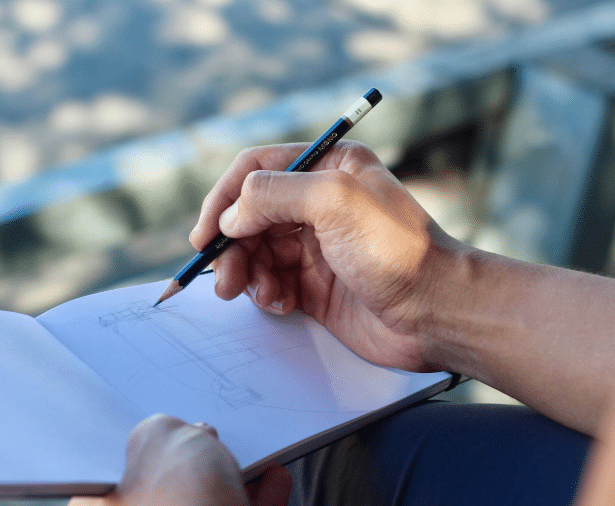
Integrative Art Therapy
Art Therapy at Create Wellbeing Therapy Collective is a powerful process for healing your pain. Art Therapy is designed to evoke and process emotional material through visual and sensory integration experiences using art supplies and can help you to visually organize and understand your past and present.
Implicit memories are unconsciously stored outside of our awareness, but emerge as visual representations through art-making. Art Therapy is often a deeply healing and transformative process for better understanding and organizing our emotions and thoughts, as well as for creative exploration and sense of purpose and meaning.
What is art therapy?
The American Art Therapy Association (AATA) defines Art Therapy as an integrative mental health and human services profession that enriches the lives of individuals, families, and communities through active art-making, creative process, applied psychological theory, and human experience within a psychotherapeutic relationship. Art Therapy, facilitated by a professional art therapist, effectively supports personal and relational treatment goals as well as community concerns.
According to AATA, Art Therapy is used to improve cognitive and sensory-motor functions, foster self-esteem and self-awareness, cultivate emotional resilience, promote insight, enhance social skills, reduce and resolve conflicts and distress, and advance societal and ecological change.
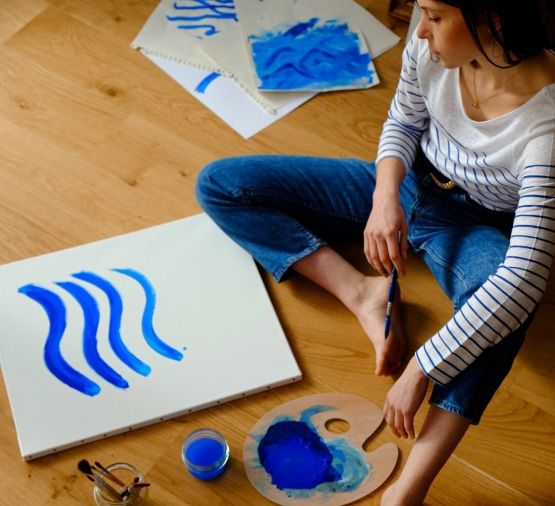

Art therapy is inherently integrative
Through integrative methods, art therapy engages the mind, body, and spirit in ways that are distinct from verbal articulation alone. Kinesthetic, sensory, perceptual, and symbolic opportunities invite alternative modes of receptive and expressive communication, which can circumvent the limitations of language. Visual and symbolic expression gives voice to experience, and empowers individual, communal, and societal transformation.
Who practices art therapy?
Registered Art Therapists (ATRs) are those who employ art therapy. They are master-level clinicians who have attended a graduate program specifically for the practice of art psychotherapy or as a combined program with another psychotherapy discipline such as Marriage and Family Therapy or Social Work. Art Therapists additionally complete 1000 hours of supervised training specifically in art therapy prior to receiving an ATR.
Common Questions About Art Therapy
Do I need to be an artist to do art therapy?
No. Art Therapy is about the process, not the product. Sometimes aesthetically pleasing art emerges in art therapy, but this is not the intent. Non-artists often have an easier time entering into this process because they do not carry the burdens of years of art class critiques. Artists actually need additional support with the art therapy process (which art therapists are equipped to provide) in order to let the creative process happen freely.
What if I want to use art as part of therapy, but I am scared to do this with someone else present.
As art therapists, we are also art-makers and intimately understand the challenges of making art with another person present. This witnessing and holding of space during creation is one of the most precious elements of art therapy though, and we are skilled at treating this with care.
How is art therapy different than art class?
How is art therapy different from talk therapy?
Art therapy gives you another language. Memories and feelings that are hard to put into words often surface as images, colors and shapes, and making art helps you see, organize and understand them. It can reach places talk therapy alone does not.
Who provides art therapy at Create Wellbeing?
Art therapy is led by our founder, Kayla Karesh, LMFT, ATR, a registered art therapist with over 20 years of experience. Registered art therapists are master’s-level clinicians who complete graduate training in art psychotherapy and 1,000 hours of supervised practice.
Who is art therapy a good fit for?
Children, teens, adults and families, and anyone who naturally turns to imagery or story to make sense of their life. It is especially helpful when feelings or memories are difficult to say out loud.
Is art therapy covered by insurance?
We work with PPO plans as an out-of-network provider and give you a superbill to submit for reimbursement. Your first 15-minute consultation is free.